

Why Is an Effective Lubrication Program Development Necessary?
In industrial environments, mechanical wear and chemical corrosion are identified as the root causes of approximately 70% of equipment failures. These phenomena not only degrade operational performance but also lead to significant repair costs and production downtime.
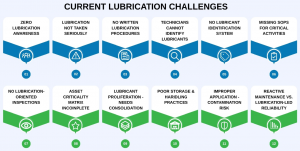
Field assessments reveal that lubrication systems in many plants suffer from systemic shortcomings, including:
- Lack of lubrication awareness: Personnel lack fundamental knowledge, which is a leading cause of preventable failures.
- Lubrication not taken seriously: Lubrication is undervalued and not integrated into the overall reliability strategy.
- Absence of written procedures: Oil changes, top-ups, and greasing are inconsistent due to the lack of standardized procedures.
- Inability to identify lubricants: Technicians are unfamiliar with lubricant identification, leading to incorrect usage and cross-contamination risks.
- Lack of identification systems: Unlabeled containers and storage points increase contamination risks and reduce equipment life.
- Missing procedures for critical activities: Oil analysis, top-ups, and consumption monitoring are not standardized.
- Lack of lubrication-focused inspections: Without periodic assessments, potential failures remain undetected.
- Incomplete asset criticality classification: Lubrication points are not prioritized based on equipment criticality.
- Excessive lubricant types: Too many lubricant brands for similar machines increase inventory and confusion.
- Poor storage and handling: Substandard storage conditions degrade lubricant quality and create hidden costs.
- Improper application methods: Incorrect lubrication leads to contamination and accelerated wear.
- Reactive instead of proactive maintenance: Organizations must shift from “fix when broken” to proactive optimization through lubrication.
How to Develop an Effective Lubrication Program
Optimizing lubrication management delivers significant benefits; however, implementation can be complex for many plants. By applying internationally recognized methodologies combined with practical field experience, VPower Reliability provides a structured solution to enable effective and sustainable transformation.
Implementation Roadmap
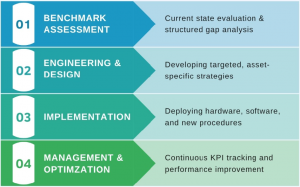
The roadmap consists of four key phases:
- Assessment (Ascend Assessment): Identify current conditions, needs, and improvement roadmap
- Engineering Design: Optimize lubrication requirements for each asset
- Implementation: Execute the program in real operations
- Management & Continuous Optimization
Core Principles of an Effective Lubrication Program
- A clearly defined roadmap
- Expert-driven methodology and best practices
- Integration of design into real-world operations
✔️ Outcome: Enables organizations to confidently implement a high-standard, effective lubrication program.
Phase 1: Initial Assessment
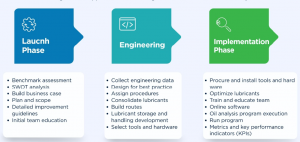
Evaluate the current lubrication practices based on 524 criteria, develop a customized success roadmap, and provide a detailed report to justify the financial benefits of improvements.
Phase 2: Engineering Design
Build the lubrication program from the ground up, including:
- Standard operating procedures (SOPs)
- Proper volume and frequency calculations
- Lubricant and hardware recommendations aligned with equipment and operational goals
Phase 3: Program Implementation
Deploy the program into actual plant operations, including:
- Team training
- Development of lubrication routes using proprietary lubrication management software
- Continuous support to ensure sustainable results
Call to Action
Are you looking for a comprehensive and professional solution for your plant’s lubrication program?
Let VPower Reliability support you in building an effective lubrication program and optimizing your existing processes.
📩 Contact Information:
Email: sales@vpowerjsc.com
Phone: 028 3899 1096

Vpower Reliability – Dẫn đầu thị trường về các giải pháp nâng cao độ tin cậy của hệ thống điện và cơ khí, cung cấp danh mục sản phẩm và dịch vụ toàn diện, được tùy chỉnh để tối ưu độ tin cậy và quản lý tài sản trong nhiều ngành công nghiệp.